

People don’t browse the internet the way they used to.
They don’t scroll endlessly.
They don’t compare 10 websites.
They don’t fill long forms.
Instead, they ask questions.
They ask chatbots.
They ask AI assistants.
They ask WhatsApp.
They ask before they click.
This shift has created a new conversion funnel, one powered by Conversational AI.
In this blog, you’ll learn:
What the new conversational AI funnel looks like
Why the old funnel is losing effectiveness
How businesses can turn conversations into conversions
How to implement this funnel step by step

The Old Conversion Funnel (Why It’s Failing)
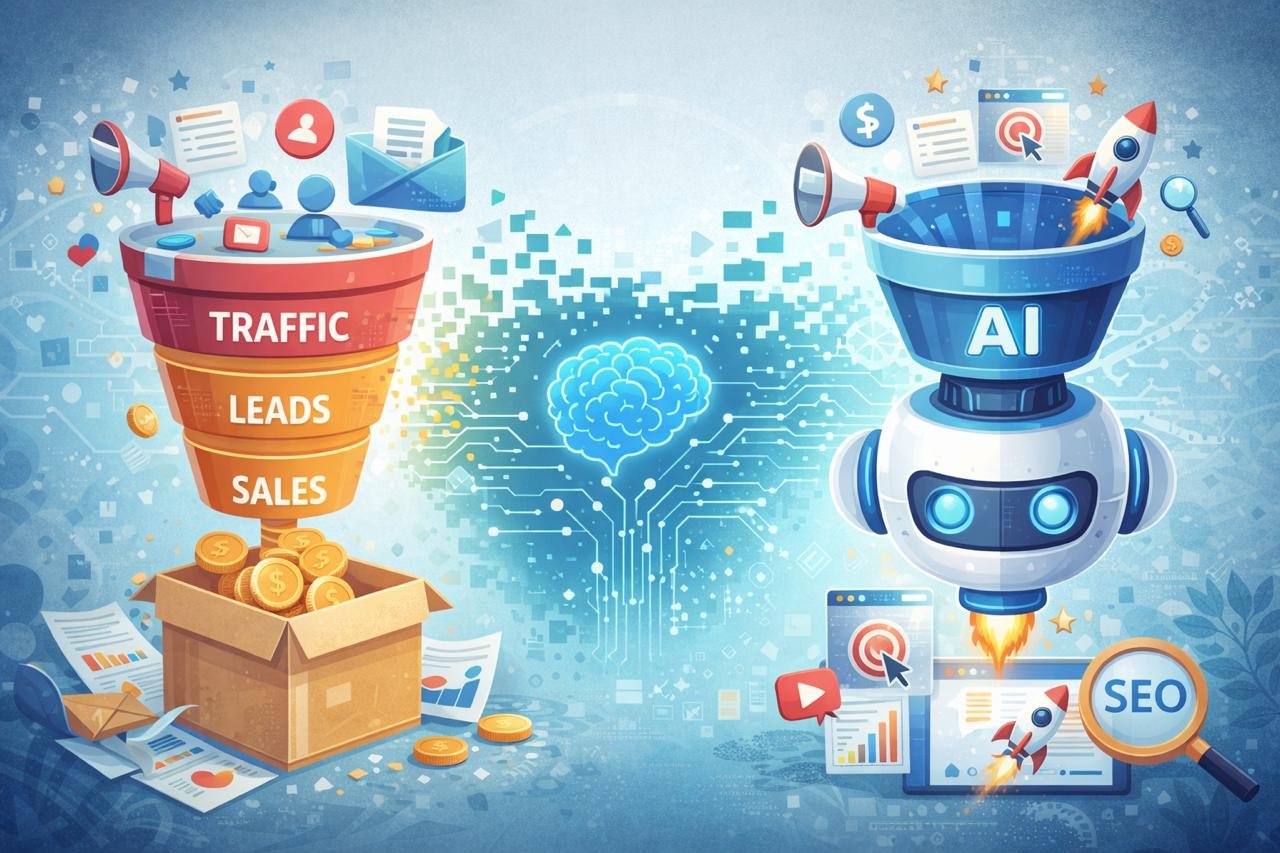
The traditional funnel looked like this:
Ad → Website → Form → Call → Sale
This worked when:
People had time to browse
Websites answered all questions
Forms didn’t feel annoying
Today, customers are impatient and overwhelmed.
Problems with the old funnel:
Too many clicks before getting answers
Forms feel slow and impersonal
Users drop off before taking action
People want instant clarity, not pages of content.
The New Funnel: Conversational AI From Browsing to Buying
The modern funnel looks like this:
Question → Conversation → Trust → Action → Sale
Instead of pushing users to read, brands now talk to them.
Conversational AI acts like a 24/7 sales assistant from answering questions, guiding decisions, and removing friction.
This is why brands using conversational AI see:
Higher engagement
Faster decisions
Better conversion rates
What Is Conversational AI (In Simple Terms)?
Conversational AI includes:
Website chatbots
WhatsApp automation
Instagram DM automation
AI assistants that answer questions
Its job is simple:
👉 Answer questions instantly and guide users to the next step.
It doesn’t replace humans, it supports and speeds up sales.
How Conversational AI Changes Customer Behavior
1. Customers Decide Faster
Instead of searching multiple pages, users get direct answers.
Example:
“Is this available?”
“What’s the price?”
“Can I book an appointment?”
AI replies in seconds, not hours.
2. Customers Feel Guided, Not Sold To
A conversation feels personal.
People are more comfortable chatting than filling forms.
That comfort builds trust.
3. Drop-Off Rates Reduce
When questions are answered instantly, fewer people leave.
Less confusion = more conversions.
The New Conversational AI Conversion Funnel (Step-by-Step)
Step 1: Browsing Turns Into Asking
Instead of clicking multiple pages, users ask:
“Is this right for me?”
“How much does this cost?”
“What’s the difference between these options?”
💡 Your job: Be present where questions happen (website, WhatsApp, Instagram).
Step 2: Conversation Builds Trust
AI answers:
Prices
Features
Availability
Timings
FAQs
This removes uncertainty which is the biggest conversion killer.
💡 Tip: Pre-load your chatbot with real customer questions.
Step 3: AI Qualifies the Lead
Instead of wasting time on unqualified users, AI can ask:
“What are you looking for?”
“What’s your budget?”
“When do you want to start?”
Only serious leads move forward.
Step 4: Smooth Handoff to Action
Once trust is built, AI guides the user to:
Book an appointment
Start WhatsApp chat
Make a purchase
Request a call
No pressure. Just flow.
Step 5: Sale + Follow-Up
AI can:
Send reminders
Share payment links
Answer post-purchase questions
This improves customer experience after the sale too.
Real Examples of Conversational AI in Action
Retail Brands
“Is my size available?”
“When will this be restocked?”
“Can I return this?”
AI answers instantly → higher sales.
Service Businesses
“How much does this service cost?”
“Do you have availability this week?”
“Can I book now?”
AI qualifies → fewer wasted calls.
Clinics & Education
Appointment bookings
Course details
Eligibility checks
AI reduces admin workload and increases bookings.
How to Make Conversational AI Work for Your Business
Step 1: Identify Where Customers Ask Questions
Common channels:
Website chat
WhatsApp
Instagram DMs
Facebook Messenger
Start with one channel, not all.
Step 2: List Top 20 Customer Questions
Examples:
Price
Availability
Process
Timelines
Guarantees
These become your chatbot’s knowledge base.
Step 3: Design Simple Conversation Flows
Keep it natural:
Question → Answer → Next step
Avoid robotic language.
Step 4: Connect AI to Real Actions
Make sure AI can:
Book appointments
Share product links
Send location
Transfer to a human when needed
Step 5: Track & Improve
Measure:
Conversations started
Leads generated
Sales closed
Improve responses monthly.
The Future of Conversions
Customers won’t stop asking questions.
They’ll just ask them faster, earlier, and inside conversations.
Brands that win won’t push harder, they’ll listen better.
Conversational AI is no longer optional.
It’s the new path from browsing to buying.
Conclusion
The conversion funnel has changed.
From clicks → conversations
From pages → answers
From selling → helping
Conversational AI bridges the gap between curiosity and confidence, and confidence leads to purchases.
If your business isn’t part of the conversation, you’re missing the conversion.
Start building your Conversational AI Funnel today and turn questions into customers.
Frequently Asked Questions (FAQs)
1. What is a conversational AI conversion funnel?
It’s a funnel where customers ask questions, have conversations, build trust, and then take action, instead of clicking through multiple pages or forms.
2. Why are traditional conversion funnels losing effectiveness?
Because users want instant answers. Long forms, multiple clicks, and delayed responses cause drop-offs before conversions happen.
3. How does conversational AI increase conversions?
By answering questions instantly, qualifying leads, and guiding users smoothly to booking, purchase, or contact actions.
4. Which businesses benefit most from conversational AI?
Retail, service businesses, clinics, education, and e-commerce any business where customers ask questions before buying.
5. How can a business get started with conversational AI?
Start with one channel (like WhatsApp or website chat), automate top FAQs, design simple conversation flows, and track results monthly.